
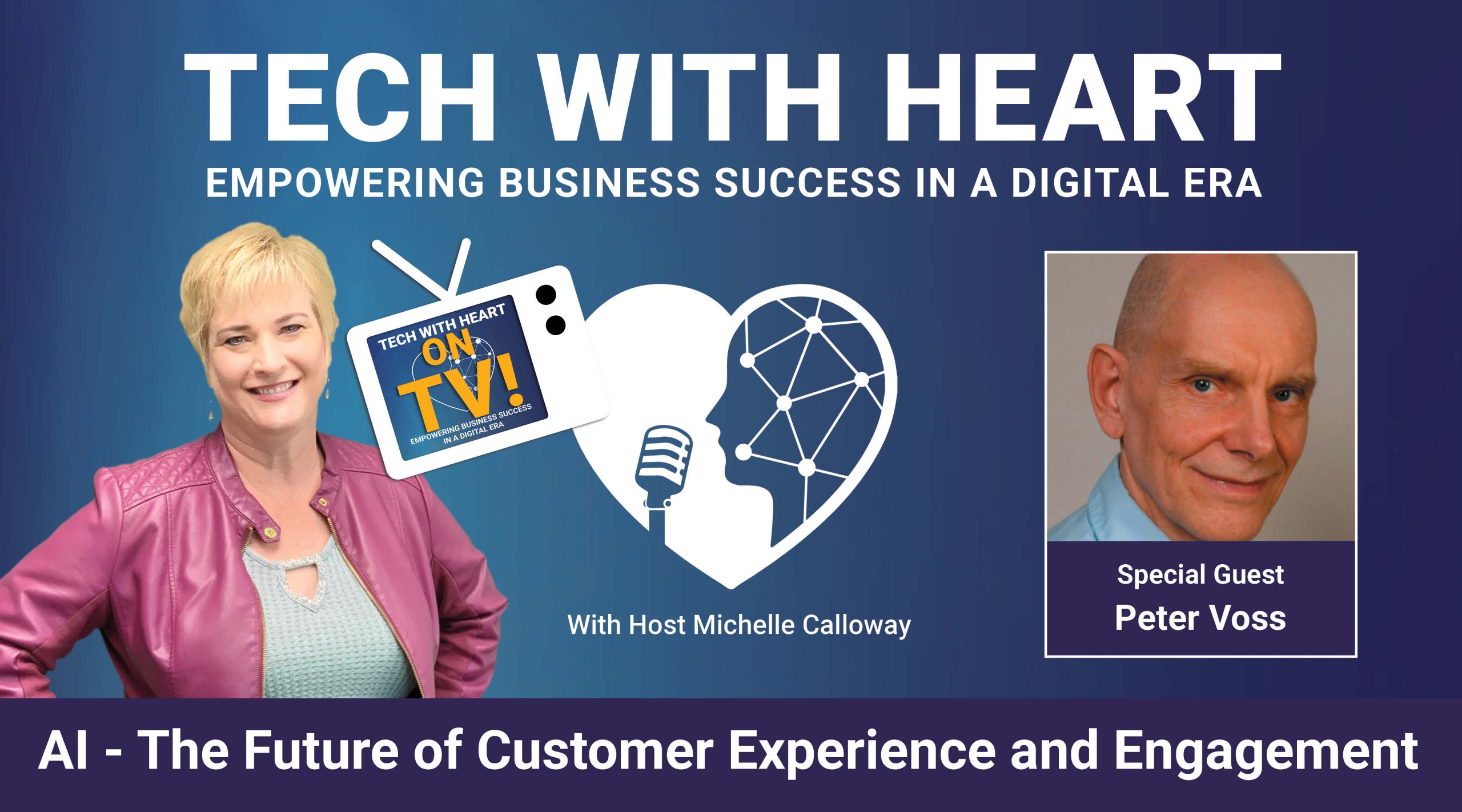
AI – The Future of Customer Experience and Engagement – A Tech With Heart Interview with Peter Voss
Beware of Using AI Chatbots Without Cognitive Skills
Over the last decade, approximately 3000 Chatbots (Conversational AI Systems/ Digital Assistants) have been introduced, and billions have been spent, yet Chatbots continue to remain dumb and ineffective in helping businesses get things done.
Like humans, Chatbots also need a Brain that gives them the fundamental Cognitive Skills to have ongoing meaningful conversations. Cognitive Skills such as understanding, learning interactively, remembering what someone said, reasoning, disambiguating, and personalizing are crucial for having conversations.
And none of these 3000 Chatbots have a Brain, therefore no Cognitive Skills, so they are inadequate by design to have meaningful conversations.
Moreover, current Chatbots use Machine Learning (ML) / Deep Learning (DL) technology, while this technology is extremely powerful for many applications, it is quite unsuitable for solving intelligent natural language interaction.
The Tech With Heart Foundation simplifies technology concepts for small business owners, so they can be competitive in a rapidly changing digital era. In this episode of the Tech With Heart Show, Media and Technology Strategist, Michelle Calloway interviews AI Pioneer, Peter Voss about generative AI versus cognitive AI and how having a chatbot with a brain is the best way to utilize AI for customer experience and engagement.
https://www.youtube.com/watch?v=bC3WN_544U8
In This Episode You Will Learn:
- How to differentiate between generative AI and cognitive AI, and which one can perform better for things like customer service and marketing
- How to use AI for business idea generation
- How to hyper-personalize a customer’s experience using a well-trained AI chatbot
One of the main takeaways from the interview is the rapid progress AI has made in recent years. Voss highlighted that AI is no longer just a concept confined to science fiction movies. It has become an integral part of our daily lives, from voice assistants on our smartphones to recommendation algorithms on streaming platforms.
However, Voss also emphasized that despite these achievements, there are still significant hurdles to overcome. One major challenge is creating AI that can reason and understand context like humans do. While AI excels at specific tasks and can process vast amounts of data, it often lacks the ability to grasp subtle nuances or make connections between different pieces of information.
Looking ahead, Voss shared his vision for the future of AI. He envisions a world where AI systems possess not only human-level understanding but short-term and long-term memory.
About Guest Peter Voss

Peter Voss is a Pioneer in AI who coined the term ‘Artificial General Intelligence’ and is the CEO and Chief Scientist at Aigo.ai. Voss and his team at Aigo have been perfecting an industry-disruptive, highly intelligent, and hyper-personalized Chatbot, with a brain, for large enterprise customers.
With this bold vision and an indomitable spirit, Peter Voss set out to pursue the Holy Grail of AI by researching ‘Intelligence’.
This research culminated in the creation of an intelligent human-like cognitive ‘Brain’ that can remember, learn, understand context, reason, disambiguate, & adapt to each user. This intelligent human-like cognitive ‘Brain’ can be embedded into any software application, or any hardware device to facilitate hyper-personalized interactions across any domain in any industry.
20+ Years in the Making
After exiting his successful ERP software company, Peter spent about 5 years studying multiple aspects of intelligence. This included such fundamental philosophical and epistemological questions as ‘what is reality, and what is knowledge?’, ‘how do we obtain knowledge and certainty?’; exploring definitions of intelligence; working on a psychometric project to better understand how different dimensions of intelligence can be measured; studying differences between animal and human intelligence; and learning about cognitive development in children. Naturally, he also looked at software engineering (including knowledgebases and language development), and at the many subfields of artificial intelligence, such as formal logic, rule systems, neural nets, machine learning, and cognitive architectures.
These investigations culminated in a new theory and model of human-like cognition and a conclusion that data & compute intense approaches like Machine Learning (ML) and Deep Learning (DL) cannot solve cognition.
About Tech With Heart
Tech With Heart is a nonprofit 501(c)(3) foundation focused on creating a safe, nurturing learning environment for entrepreneurs, students, and children. Tech With Heart is a nonprofit with a passion to ENLIGHTEN and EMPOWER business owners to EMBRACE technology and business strategies that will keep them competitive and relevant for long-term success, in a rapidly changing digital world. The entrepreneurial support program, Tech With Heart Network, is unlike other business networks because they are a nonprofit focused on serving and supporting, not gaining financial wealth.
- Members are heart-centered AND forward-thinking
- They teach emerging technologies and growth strategies
- All questions are good questions. They provide timely answers too!
- All ages and knowledge levels are welcome to participate
- Members build and nurture long-term business relationships as they grow alongside one another
- Warm, professional, and vetted business referral network
Visibility and promotional opportunities for experts and influencers as they enlighten and empower the entrepreneurial audience
https://www.youtube.com/watch?v=ainzt9NylOI
Join Tech With Heart Community
Would You Like To Be Interviewed On The Tech With Heart Network Or TV Show?
If you would like to gain visibility, and build credibility and authority as the expert in your industry, we have an opportunity for you.
We are always on the lookout for innovative, heart-centered business experts to be interviewed on the Tech With Heart stage.
You need to own your own business, and your business model, service, or product needs to add value to help others grow their businesses as well. If this opportunity seems like a good fit for you, please click here to be considered.
Michelle Calloway
Founder & Host at Tech With Heart Foundation & Network. Empowering small business growth through human-centered technology.
More From Tech With Heart

How to Grow Your Small Business Without Losing the Human Touch
Growth does not have to make your business feel less personal. Discover 5 simple systems to grow your small business while maintaining genuine human connection.
Differences Of Automation vs Conversational AI with Michelle Calloway
Small business owners may be hesitant to fully embrace automation and AI into their business practices because of a concern that it will hinder their ability to have that ‘Human Touch” that they value so much between them and their clients.
Invisible Technology Leads To Visible Growth with Michelle Calloway
Technology should be invisible, a seamless part of business operations that empowers businesses to focus on what truly matters—connecting human to human. Michelle Calloway discusses three key areas to leverage automated technologies.